By FundingsStartup Editorial Team | May 2026 | 11 min read
The Math That Changes Everything for Every Startup
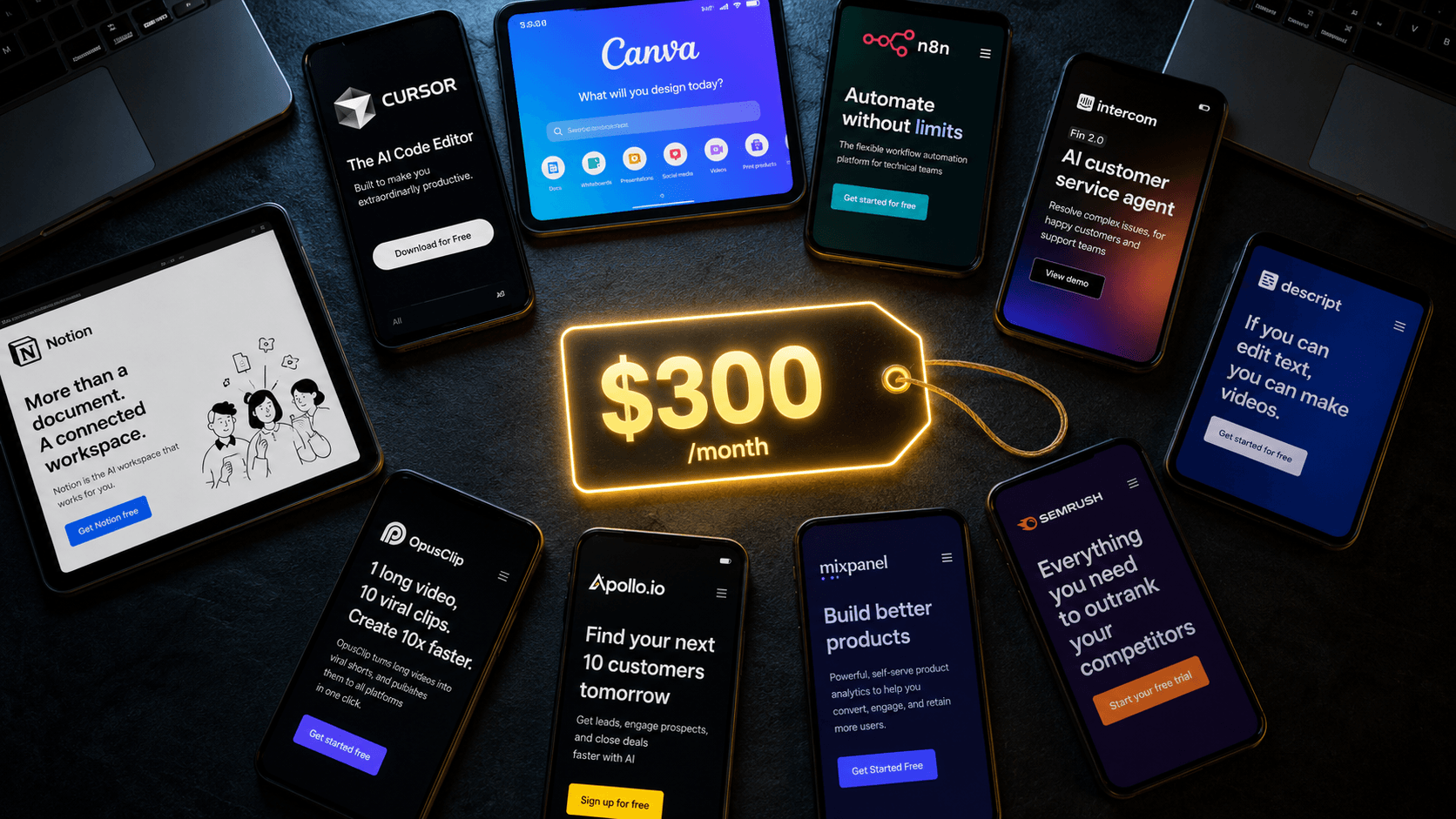
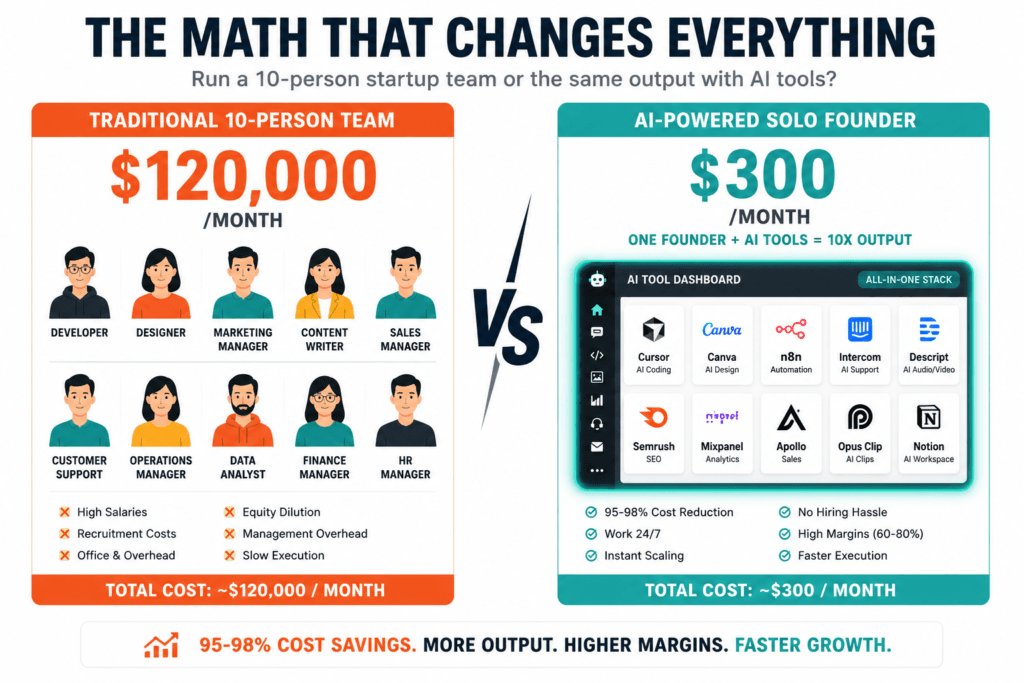
Running a 10-person startup team in 2026 costs between $80,000 and $120,000 per month in salaries alone — before you add startup office costs, startup equity dilution, recruitment fees, startup management overhead, and the enormous hidden cost of coordination that grows with every new person added to the startup.
The most successful solo startup founders of 2026 are running the exact same functions for under $300 per month using AI startup tools. That is a 95–98% cost reduction. The startup operating margins this creates — often 60–80% — are simply impossible for a traditionally staffed early-stage startup to achieve.
This article is the definitive startup tool guide for 2026. Each of the 10 tools below replaces a specific startup team role, includes exact startup pricing, and explains precisely how to deploy it inside your startup from day one. By the end, you will have a complete startup operating system that costs less than most startup founders spend on coffee each month.
The broader startup implication of this tool revolution is worth stating clearly: the cost of starting and running a startup has never been lower in human history. For the first time, a startup founder in a Tier-2 Indian city has access to the same startup infrastructure as a startup founder in San Francisco — at a price that makes geographic advantage essentially irrelevant. This is the most democratising startup development in the history of entrepreneurship.
“The most dangerous competitor to any traditional startup in 2026 is a single founder with a $300/month tool stack and 12 months of runway.”
Startup Tool 1 — Cursor AI: Your Startup’s Software Development Team ($20/Month)
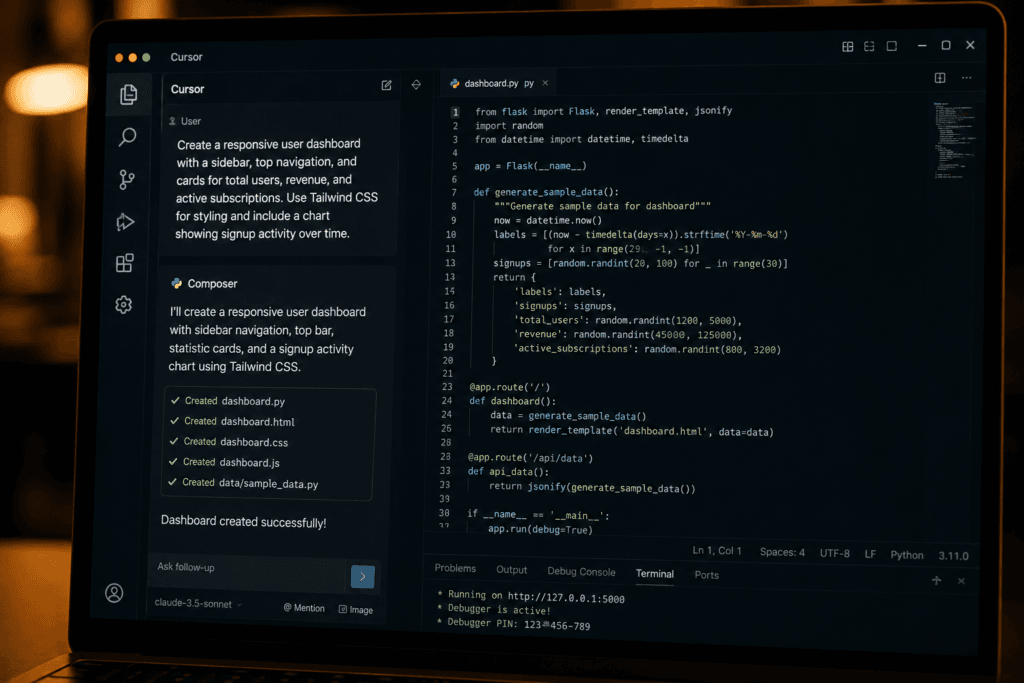
Cursor is the AI code editor that has become the default development environment for the most productive solo startup founders in 2026. It allows any startup founder — technical or not — to describe features in plain English and receive complete, production-quality code.
Startup role replaced: Junior + mid-level engineer. Startup salary equivalent: $120,000–$180,000/year. Cursor startup subscription: $20/month.
What makes Cursor particularly powerful for a solo startup founder is its “Composer” feature — which allows a startup founder to describe an entire feature set and have Cursor plan, write, and link together all the necessary code files automatically. For a startup that needs to ship new features weekly to stay ahead of competition, Cursor is the startup tool that makes that velocity possible without a startup development team.
Pair Cursor with Claude Code by Anthropic for the most powerful AI-assisted startup development stack available in 2026.
“In 2026, the most productive startup developer is not always a person. Sometimes it is a $20/month AI subscription that never sleeps.”
Startup Tool 2 — Canva AI: Your Startup’s Design Department ($15/Month)
Every startup needs professional design — for its startup website, startup ads, startup social content, startup pitch decks, and startup brand identity. Canva AI’s Magic Studio generates all of this from text prompts, with a library of startup-ready templates.
Startup role replaced: Senior graphic designer. Startup salary equivalent: $65,000–$90,000/year. Canva Pro startup subscription: $15/month.
The startup advantage Canva AI creates beyond cost savings is speed of brand consistency. A solo startup founder can maintain visual brand consistency across every startup touchpoint — website, social media, startup pitch decks, startup email templates — in a fraction of the time it would take to brief and receive work from a startup design hire. For a startup building brand trust in a new market, that consistency of visual identity is a competitive startup differentiator that costs $15 a month.
“Your startup’s design quality should be indistinguishable from a startup with a full design team. Canva AI makes that possible.”
Startup Tool 3 — n8n: Your Startup’s Operations Manager ($0–30/Month)
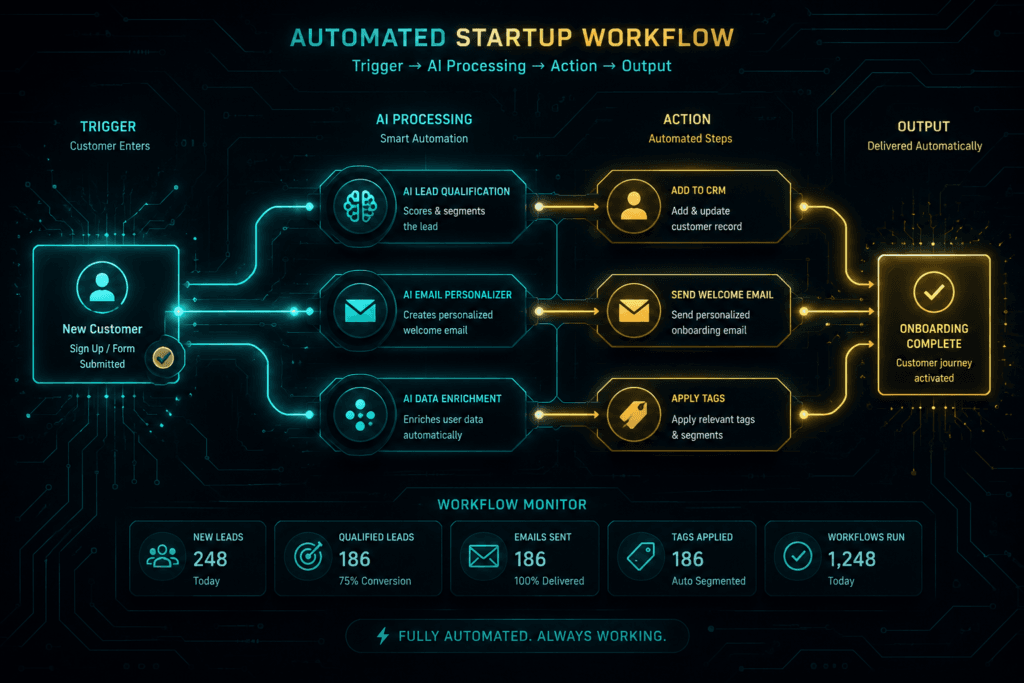
Every growing startup creates repetitive operational workflows. n8n is an open-source startup automation platform that handles all of this without code.
Startup role replaced: Operations manager + executive assistant. Startup salary equivalent: $70,000–$100,000/year. n8n startup cost: Free self-hosted or $20–30/month cloud.
Top n8n Startup Automation Use Cases
- Automatic startup CRM updates when new customers sign up
- Startup invoice generation and payment reminders without manual intervention
- Startup lead qualification and routing to appropriate follow-up sequences
- Social media startup content scheduling across all platforms simultaneously
- Startup customer onboarding sequences triggered by product actions
The compounding value of n8n for a solo startup founder is that every automation you build is a permanent reduction in your startup’s future operational burden. Each workflow you automate is a task you will never need to do manually again — regardless of how large your startup grows. The startup that invests early in n8n automation is essentially hiring an operational team that works 24 hours a day, never makes the same mistake twice, and costs $30/month.
“The startup that automates its operations early competes at the speed of software, not the speed of people.”
Startup Tool 4 — Intercom Fin: Your Startup’s Entire Support Team ($39/Month)

Customer support is one of the first startup functions that breaks when a startup starts growing. Intercom Fin is an AI startup support agent that handles 90%+ of startup customer queries automatically, escalating to a human only when genuinely necessary.
Startup role replaced: 3–5 customer support agents. Startup salary equivalent: $120,000–$200,000/year. Intercom Fin startup cost: $39/month.
Beyond cost, the startup experience quality that Intercom Fin delivers is genuinely superior to most human startup support teams. Fin responds instantly, at any hour, in multiple languages, and gives perfectly consistent answers every time. For a startup serving a global customer base, this startup consistency is impossible to achieve with a human support team at any reasonable startup cost.
“Your startup’s customer support quality is a startup growth lever. AI makes world-class support affordable for every startup.”
Startup Tool 5 — Descript: Your Startup’s Video and Podcast Production Team ($24/Month)
Content marketing is one of the highest-ROI startup growth channels available in 2026. Descript allows any startup founder to record, edit, and publish professional-quality startup video and podcast content by editing text — no video editing skill required.
Startup role replaced: Video editor + content producer. Startup salary equivalent: $80,000–$120,000/year. Descript startup subscription: $24/month.
“A startup with consistent content output in 2026 has a compounding growth engine that paid startup advertising can never match.”
Startup Tool 6 — Semrush AI: Your Startup’s SEO and Marketing Intelligence Team ($140/Month)

Every startup that wants organic startup traffic needs startup SEO intelligence. Semrush AI provides startup keyword research, startup competitor analysis, startup content optimisation, and startup backlink tracking.
Startup role replaced: SEO manager + marketing analyst. Startup salary equivalent: $110,000–$150,000/year. Semrush startup subscription: $140/month.
The startup ROI of Semrush compounds dramatically over time. A startup that builds strong organic search visibility in its first year creates a sustainable startup traffic asset that continues generating startup customer acquisition without ongoing ad spend. For a startup competing against well-funded incumbents with large paid marketing budgets, owning organic search rankings is the equalising startup strategy that AI-powered SEO tools make possible at a fraction of traditional costs.
“The startup that wins at organic search in 2026 has a customer acquisition advantage that paid startup ads can never buy at the same cost.”
Startup Tool 7 — Mixpanel: Your Startup’s Data Analytics Team ($0–45/Month)

Every startup decision should be driven by startup product data. Mixpanel tracks how startup users behave inside your product, which startup features drive retention, and where startup users drop off.
Startup role replaced: Data analyst. Startup salary equivalent: $80,000–$120,000/year. Mixpanel startup cost: Free up to 20M events, then $45/month.
“The startup that knows its numbers at every stage builds with certainty. The startup that guesses builds with hope.”
Startup Tool 8 — Apollo.io: Your Startup’s Sales Development Team ($59/Month)
For B2B startups, the startup sales development function is one of the most expensive and time-consuming startup operations. Apollo.io automates startup lead generation, startup email sequencing, and startup prospect research completely.
Startup role replaced: 2–3 sales development representatives. Startup salary equivalent: $120,000–$200,000/year. Apollo startup subscription: $59/month.
The startup efficiency Apollo creates is not just about replacing headcount — it is about startup pipeline consistency. Human startup sales teams have good weeks and bad weeks, high-motivation days and low-motivation days. Apollo runs the same startup outreach with the same startup quality every single day, generating a consistent pipeline of qualified startup prospects that a solo startup founder can close themselves without needing a full startup sales team.
“Your B2B startup does not need a startup sales team in 2026. It needs a startup system — and Apollo is that system.”
Startup Tool 9 — Opus Clip: Your Startup’s Short-Form Video Marketing Team ($19/Month)
Short-form startup video on Instagram Reels, TikTok, and YouTube Shorts is one of the highest-converting startup marketing channels available to a solo startup founder in 2026. Opus Clip automatically converts long-form startup content into 10–60 second startup clips optimised for each platform.
Startup role replaced: Short-form video editor + social media manager. Startup salary equivalent: $60,000–$90,000/year. Opus Clip startup subscription: $19/month.
“Every startup that creates long-form content and ignores short-form distribution is leaving startup growth on the table.”
Startup Tool 10 — Notion AI: Your Startup’s Chief of Staff ($16/Month)
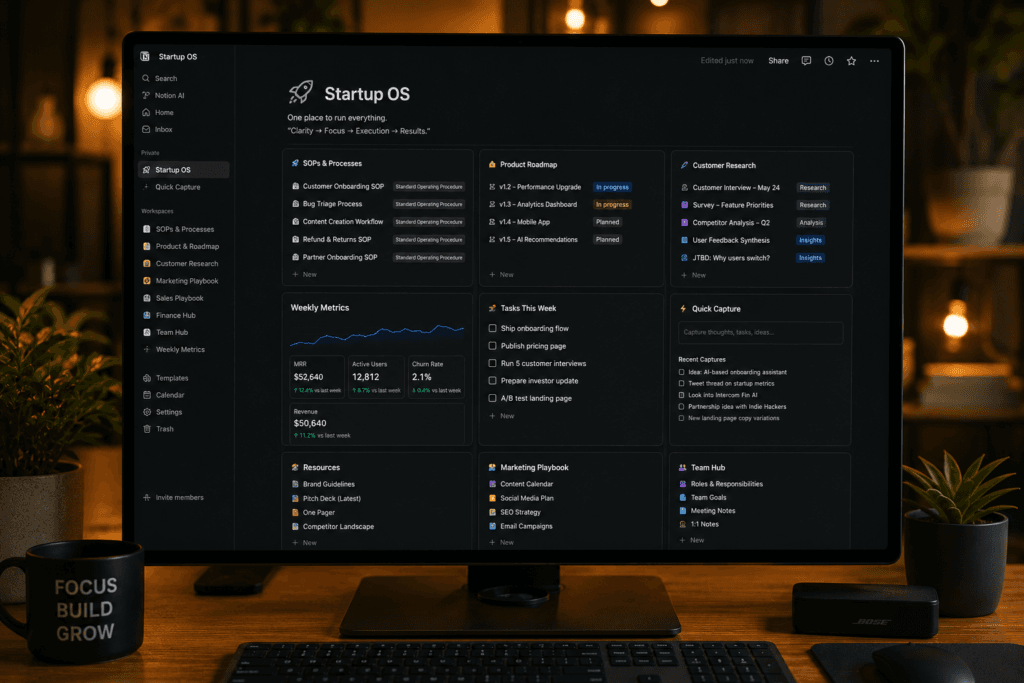
Every startup has a river of internal knowledge — startup SOPs, startup meeting notes, startup product roadmaps, startup customer research, startup investor updates. Notion AI organises, summarises, drafts, and retrieves all of this startup knowledge on demand, functioning as a permanently available startup chief of staff.
Startup role replaced: Chief of staff + executive assistant + documentation manager. Startup cost equivalent: $100,000–$150,000/year. Notion AI startup subscription: $16/month.
The most underappreciated startup function that Notion AI handles is startup institutional memory. As a solo startup founder, there is no team to remember decisions, document processes, and maintain context between projects. Notion AI serves as your startup’s persistent, searchable, always-available memory — ensuring that no startup insight, no startup customer feedback, and no startup decision rationale is ever lost as your startup grows.
“A well-documented startup is a scalable startup. Notion AI makes documentation the easiest part of running your startup.”
Your Complete Startup Stack at a Glance

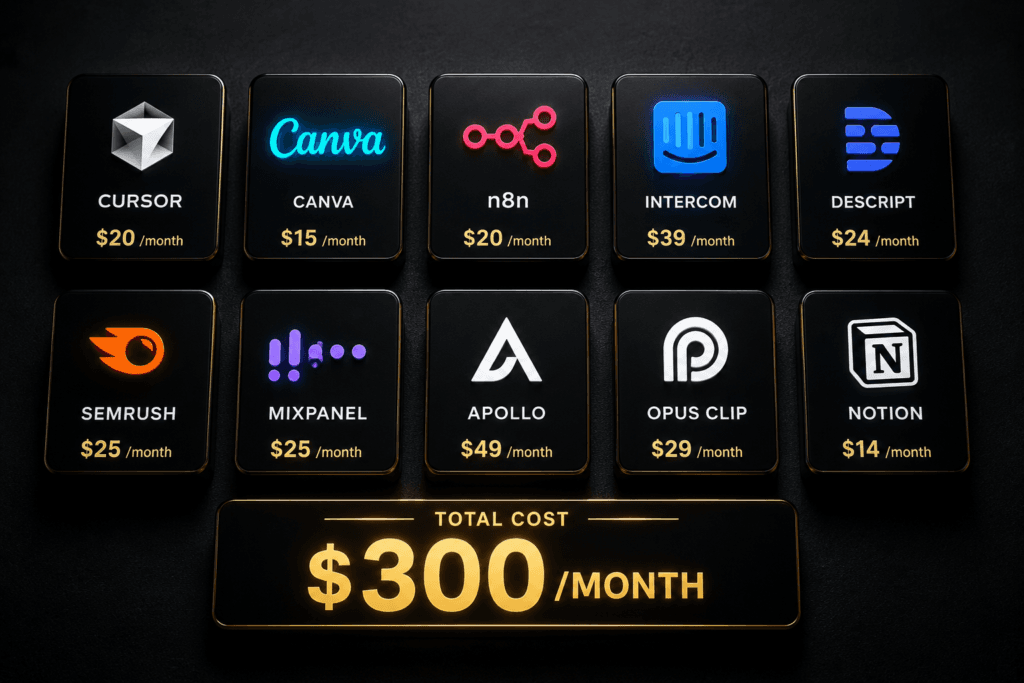
- Cursor AI (development): $20/month
- Canva AI (design): $15/month
- n8n (automation): $0–30/month
- Intercom Fin (support): $39/month
- Descript (video content): $24/month
- Semrush AI (SEO/marketing): $140/month
- Mixpanel (analytics): $0–45/month
- Apollo.io (sales): $59/month
- Opus Clip (short-form video): $19/month
- Notion AI (knowledge/operations): $16/month
Total startup monthly cost: $332–427/month. Equivalent traditional startup team cost: $80,000–$120,000/month. This is not a lean startup. This is a supercharged startup operating at margins most established companies would envy.
One final startup note on this stack: these tools are not just cheap alternatives to human startup team members. In several key respects, they are superior to their human counterparts for the specific tasks they perform. Intercom Fin responds to your startup’s customers faster than any human support agent. Semrush AI processes more startup competitor data than any one human analyst could review. Apollo.io runs more startup sales outreach with more consistency than any human SDR team. The solo startup founder who masters this stack is not just operating cheaply — they are operating with a startup capability advantage that traditionally-staffed startups genuinely cannot match.
“The startup with this stack does not punch above its weight. It operates at a weight class that a 10-person team cannot touch.”
you must know these topics which are so important before you start a start up:
- 7 Powerful AI Start up Trends Making Non-Coders Millions Through Vibe Coding in 2026
- 6 Shocking Startup Secrets Behind the $401M Telehealth Company Built by One Person
- 7 Shocking AI Startup Trends Creating One-Person Billion-Dollar Companies in 2026
- Top 5 Shocking Misapprehensions Founders Make When Raising Capital
- Founder Reality Check:6 Brutal Start up Funding Myths Every Founder Must Stop Believing
- Why Start ups Fail to Get Funding from Investors: 28 Hard Truths No One Tells You
- Start up Fundability Explained: 7 Powerful Readiness Signals Founders Must Get Right
- Start up Non-Dilutive & Alternative Funding: 7 Powerful Ways to Raise Capital Without Equity
- Angel Funding and Early-Stage Capital: 5 Core Principles That Shape Start up Growth
- Start Up Funding in India: 10 Proven Strategies for Massive Growth
- Start Up Success: 7 Powerful Pitch Deck Storytelling Secrets That Win Investors
- From Classroom to Capital: The Ultimate Funding Guide for Student & First-Time Founders
- Founder Guide: 5 Powerful Funding Trends Every Start up Must Know
Conclusion: The Future Belongs to Lean, AI-Powered Startups
The startup landscape of 2026 looks fundamentally different from anything entrepreneurs have seen before. For decades, building a successful company required large teams, significant capital, and years of operational complexity. Today, AI has rewritten those rules. A founder with the right vision, execution ability, and AI-powered tool stack can now achieve what once required an entire department of specialists.
The ten tools covered in this guide are more than productivity boosters—they represent a complete shift in how startups are built, scaled, and operated. From product development and design to customer support, marketing, analytics, sales, and operations, AI now enables founders to create highly efficient businesses at a fraction of traditional costs. The result is a new generation of startups that are faster, leaner, and significantly more profitable from day one.
However, tools alone do not guarantee success. The real advantage comes from understanding how to combine these technologies with strong market research, customer obsession, strategic thinking, and relentless execution. AI can automate work, but it cannot replace a founder’s vision, creativity, or ability to identify meaningful opportunities.
The most successful founders of the next decade will not necessarily be the ones with the biggest teams or the most funding. They will be the founders who learn to leverage AI as a force multiplier, allowing them to move faster than competitors while maintaining exceptional efficiency. As the cost of building a startup continues to fall, the barrier to entrepreneurship is disappearing for talented individuals worldwide.
The opportunity has never been greater. Whether you are a student, first-time founder, or experienced entrepreneur, there has never been a better time to launch. Master these tools, understand the funding principles outlined in our recommended guides, and start building. The next breakout startup may not be backed by a large team—it may be built by a single founder empowered by AI.
FAQ
Can a startup really replace a 10-person team with AI tools?
Yes. Thousands of profitable solo startup founders in 2026 are running startups generating $100,000–$2M+ in annual recurring startup revenue using tool stacks costing $300–500/month. The specific 10 startup tools in this article cover every function a traditional 10-person startup team would perform.
What is the most important AI tool for a first-time startup founder?
The highest-priority startup tool depends on your startup model. For product startup founders, Cursor or Claude Code is the essential first tool. For content-led startup founders, Semrush AI and Opus Clip deliver the fastest startup growth ROI. Every startup benefits from n8n automation from day one.
Is a $300/month startup stack enough for a serious startup in 2026?
Yes. Multiple startups generating $1M+ in annual startup revenue operate on stacks costing $300–500/month. The startup tools in this article are not beginner tools — they are the same platforms being used by some of the most capital-efficient startups in the world right now.
Do startup investors care if you use AI tools instead of a startup team?
No. Startup investors in 2026 evaluate traction, revenue growth, and startup unit economics. A startup generating $30,000 MRR with an AI stack is significantly more fundable than a startup with a large team and no revenue. The startup tool stack you use is irrelevant — your startup results are everything.
When should a solo startup founder start hiring a real startup team?
The most cited threshold among profitable solo startup founders is $100,000 in monthly recurring startup revenue. Below that level, the startup overhead of managing people typically costs more than it delivers. Above that startup revenue level, strategic hires in sales or enterprise startup account management may make economic sense.