
Introduction: Why Start up Funding Trends Matter Today
The start up world is evolving faster than ever. Every year, new technologies, investor behaviours, and market demands reshape how start ups grow and secure funding. For entrepreneurs, understanding start up funding trends is no longer optional—it is a powerful advantage.
A start up is not just about having a great idea. It is about timing, awareness, and strategy. Founders who understand the funding ecosystem are better prepared to attract investors and scale their businesses successfully.
“The best start up founders are not just innovators—they are market observers who understand where capital is flowing.”
Why Start up Funding Trends Matter
Tracking start up funding trends helps entrepreneurs make smarter and more strategic decisions. Investors constantly shift their focus toward industries and technologies that promise high growth. If a founder remain unaware of these shifts, they risk missing valuable opportunities.
Understanding funding trends helps start ups:
- Identify high-demand industries where investors are actively investing
- Align their business model with market expectations
- Prepare better investment pitches
- Reduce funding risks in competitive markets
The Importance of Market Awareness for Start ups
A successful start up founder must also develop strong market awareness. This means a founder must understand customer needs, industry changes, and competitor strategies.
When start ups combine funding awareness with market insights, they gain a competitive edge that many new businesses lack.
Key benefits of strong market awareness include:
- Spotting emerging opportunities before competitors
- Understanding what investors are looking for
- Building products that truly solve market problems
In today’s highly competitive start up ecosystem, a founder who stays informed about funding trends and market dynamics position themselves for faster growth and long-term success.
Ultimately, a start up that understands where the money flows and where the market moves gains the powerful advantage needed to thrive in the modern entrepreneurial landscape.
The Current Start up Funding Landscape

The start up ecosystem today is more dynamic and competitive than ever before. Over the past decade, global investment in start ups has grown rapidly, creating new opportunities for entrepreneurs while also increasing competition for funding.
In India’s competitive start up ecosystem, a strong pitch transforms ideas into investor confidence and funding success.
- To know about Top 5 Shocking Misapprehensions Founders Make When Raising Capital click here.
- To know about Why Start ups Fail to Get Funding from Investors click here.
- To learn about start up fundability click here.
- To understand Why investors Readiness Matters in Start up click here.
- To know about Start up Non-Dilutive & Alternative Funding: 7 Powerful Ways to Raise Capital Without Equity click here.
- To know about Start up Angel Funding and Early-Stage Capital click here.
A modern start up must navigate a funding environment shaped by technological innovation, economic shifts, and changing investor priorities. Investors are no longer just looking for ideas—they want scalable business models, market validation, and strong growth potential.
“Investors don’t fund ideas alone; they fund solutions that can transform markets.”
How Start up Investments Have Changed in Recent Years
In recent years, start up funding has evolved significantly. Traditional investment patterns are shifting toward technology-driven and high-impact industries.
Some of the major changes include:
- Increased focus on AI and emerging technologies
- Growth of early-stage funding platforms and angel networks
- Investors prioritizing sustainable and scalable start ups
- Global investors funding start ups beyond their local markets
This shift means a founder must understand where investor attention is moving and adapt their strategies accordingly.
Major Factors Influencing Start up Funding
Several powerful factors shape the modern start up funding landscape:
- Global economic conditions – Interest rates, inflation, and market stability influence investor confidence.
- Technological innovation – Breakthrough technologies attract significant venture capital.
- Investor risk appetite – Investors constantly balance risk with potential returns.
For a founder, understanding these factors can provide a strategic advantage when seeking funding.
Ultimately, a start up that understands the current funding landscape can position itself to attract investors, secure capital, and build a sustainable path toward long-term success.
Major Start up Funding Sources Entrepreneurs Should Know
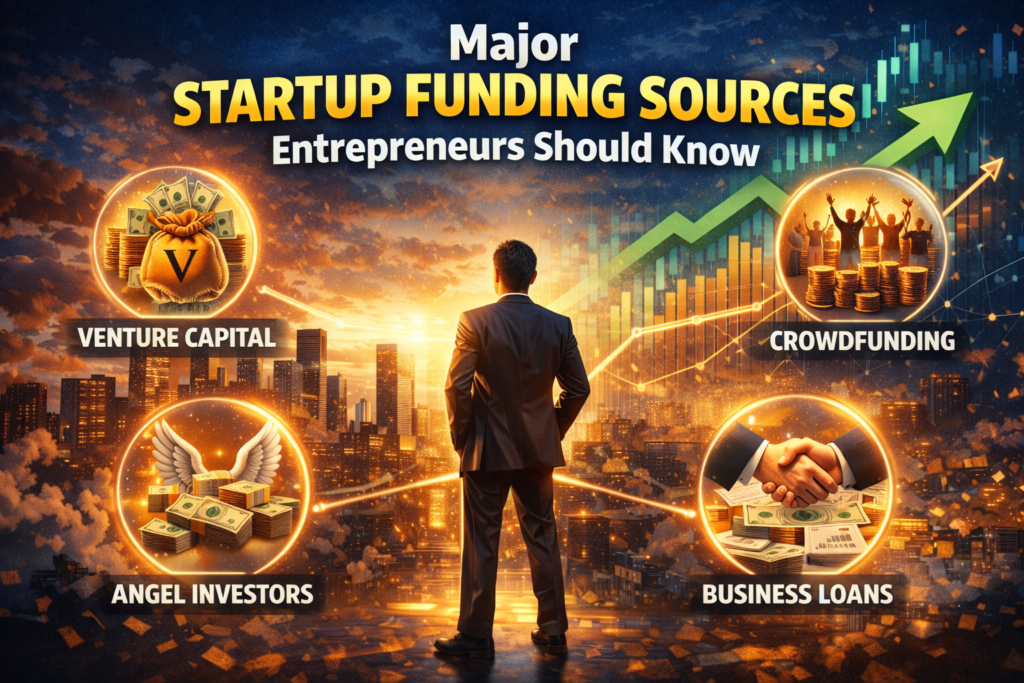
Every start up needs capital to grow, innovate, and reach the market. Understanding the right funding sources can help a founder to secure investment faster and build a sustainable business.
“A start up’s growth often depends on choosing the right funding partner at the right time.”
Angel Investors and Early-Stage Capital
Angel investors are individuals who invest in early-stage start ups with high potential. They usually provide funding in exchange for equity and often offer valuable mentorship and industry connections.
Venture Capital and Growth Funding
Venture capital firms invest in start ups that show strong growth potential. This type of funding is typically used to scale operations, expand into new markets, and accelerate product development.
Crowdfunding and Community-Driven Investment
Crowdfunding platforms allow start ups to raise money from large groups of supporters online, helping validate ideas while generating early customer interest.
Government Grants and Start up Support Programs
Many governments offer grants, subsidies, and incubation programs that help start ups grow without giving up equity.
Emerging Start up Funding Trends Shaping the Market

The start up ecosystem is constantly evolving, and new funding trends are shaping how entrepreneurs secure capital. A smart start up founder must stay updated with these trends to attract investors and stay ahead of the competition.
“In the start up world, those who understand where the funding is moving gain a powerful advantage.”
Rise of AI and Deep Tech Start up Investments
Investors are increasingly funding start ups working on Artificial Intelligence, robotics, and deep tech innovations. These sectors promise high-impact transformation, making them highly attractive to venture capital firms.
Growth of Sustainable and Green Start ups
Many investors are now focusing on start ups that support sustainability, clean energy, and eco-friendly solutions. These start ups not only generate profits but also create positive global impact.
Increase in Micro-VC and Solo Investors
A growing number of micro-venture capital firms and solo investors are funding early-stage start ups. This trend creates more opportunities for new entrepreneurs.
Globalization of Start up Funding
Today, a start up can attract investors from anywhere in the world, opening doors to larger and more diverse funding opportunities.
How Market Awareness Impacts Start up Success

A start up does not succeed only because of a good idea. It succeeds when the idea fits perfectly with market needs. This is where market awareness becomes a critical advantage for entrepreneurs.
Market awareness means understanding customer behaviour, industry trends, and competitor strategies. When founders stay informed about these factors, they can make smarter business decisions and position their start up for long-term growth.
“A successful start up is not the one with the best idea, but the one that solves the right problem at the right time.”
Understanding Customer Needs and Market Demand
Every start up should begin by identifying real problems faced by customers. By studying market demand, start ups can build products or services that truly solve meaningful challenges.
Key benefits include:
- Creating solutions customers actually want
- Improving product-market fit
- Increasing chances of investor interest
Identifying Market Gaps and Opportunities
Market awareness helps founders discover untapped opportunities. When entrepreneurs analyse trends and consumer behaviour, they can identify gaps that competitors have overlooked.
Monitoring Competitors and Industry Trends
A smart founder always studies its competitors. Understanding competitor strengths and weaknesses helps founders develop stronger strategies and unique value propositions.
Ultimately, a start up that maintains strong market awareness gains a powerful edge, allowing it to adapt quickly and grow successfully in a highly competitive business landscape.
Strategies for Start ups to Attract Investors

For any start up, securing investment is a crucial step toward growth and expansion. However, investors are selective and look for businesses that demonstrate strong potential, clear vision, and scalable opportunities. By following the right strategies, the founder of a start up can significantly improve its chances of attracting funding.
“Investors invest in confidence, clarity, and growth potential, not just ideas.”
Building a Strong Business Model
A successful start up must present a clear and sustainable business model. Investors want to understand how the start up plans to generate revenue and maintain long-term profitability. A well-structured model shows that the business is built for sustainable success.
Creating a Scalable Product or Service
Scalability is one of the most powerful factors investors consider. Start ups that can expand quickly without dramatically increasing costs are more attractive to venture capitalists and angel investors.
Demonstrating Market Validation
Investors feel more confident when a start up already shows real demand. Evidence such as early customers, user growth, or pilot projects proves that the market values the product.
Presenting a Powerful Start up Pitch as a Founder
A clear, compelling pitch can make a strong impression. Founders should highlight their vision, market opportunity, and growth strategy to capture investor attention.
Common Funding Mistakes Start ups Should Avoid
Every founders aims to secure funding quickly, but many founders make mistakes that can reduce their chances of attracting investors. Understanding these common errors can help entrepreneurs build a stronger and more credible start up.
“Funding does not fail because of lack of ideas; it fails because of poor preparation and weak strategy.”
Overvaluing the Start up Too Early
One of the most common mistakes start ups make is setting unrealistic valuations in the early stages. While confidence is important, investors expect valuations to reflect actual progress, market validation, and growth potential.
An inflated valuation can discourage investors and create trust issues during negotiations.
Ignoring Market Research
A start up that lacks proper market research often struggles to convince investors. Founders must clearly demonstrate market demand, target audience, and industry opportunities.
Without this information, the business idea may appear risky or poorly planned.
Poor Financial Planning
Financial planning is a critical factor in start up funding. Investors want to see detailed projections, cost structures, and revenue strategies.
Start ups should focus on:
- Clear financial projections
- Realistic growth plans
- Transparent use of funding
Avoiding these mistakes helps a start up build credibility, investor trust, and long-term sustainability, making it far more attractive in the competitive funding landscape.
Case Study: A Successful Start up Funding Journey
Understanding how a start up successfully secures funding can provide valuable lessons for new entrepreneurs. Many successful start ups began with limited resources but grew rapidly by combining market awareness, strong strategy, and investor confidence.
“Every successful start up story begins with identifying a real problem and building a solution the market truly needs.”
How the Start up Identified Market Opportunity
A promising start up first conducted deep market research to understand customer pain points and industry gaps. By carefully analysing market trends and consumer behaviour, the founders identified a high-demand opportunity that competitors had not fully addressed.
This step helped the start up build a solution-focused product that immediately attracted attention in the market.
Funding Strategy That Led to Growth
Instead of seeking large investments immediately, the start up initially raised funds from angel investors and early-stage supporters. These investors believed in the vision and helped the start up build its initial product.
As the business gained traction and demonstrated strong user growth, venture capital firms became interested and provided larger funding rounds to scale operations.
Key Lessons for New Entrepreneurs
This start up journey highlights several powerful lessons:
- Start with strong market research
- Build a product that solves real problems
- Secure early traction before approaching large investors
These strategies can significantly improve a start up’s chances of successful funding and long-term growth.
Future Outlook: Where Start up Funding Is Headed
The start up ecosystem continues to evolve, and the future of start up funding is expected to become even more dynamic and opportunity-driven. As technology advances and global markets expand, investors are constantly searching for start ups that demonstrate innovation, scalability, and strong market potential.
For any start up, understanding future funding trends can provide a strategic advantage when planning long-term growth.
“The future belongs to start ups that combine innovation, adaptability, and market awareness.”
Technology-Driven Investment Growth
One of the most powerful trends shaping the future is the rapid growth of technology-focused start ups. Investors are increasingly funding start ups working in areas such as Artificial Intelligence, blockchain, biotechnology, and automation.
These industries are expected to drive major global transformations, making them highly attractive for venture capital investments.
Increasing Role of Global Investors
Start up funding is becoming more global than ever before. Today, investors are not limited by geography and frequently invest in promising start ups across different countries.
This global investment environment creates greater opportunities for start ups to access funding, partnerships, and international markets.
New Opportunities for Early-Stage Start ups
The future also looks promising for early-stage start ups. With the rise of micro-venture capital firms, start up accelerators, and online investment platforms, founders now have more ways to secure funding than ever before.
Start ups that stay informed about funding trends, market needs, and technological innovation will be better positioned to attract investors and build sustainable businesses in the evolving start up landscape.
Conclusion
The journey of building a successful start up is both exciting and challenging. From understanding funding sources to analysing market trends, every step plays a critical role in shaping the future of a start up. Entrepreneurs who stay informed about start up funding trends and market awareness gain a powerful advantage in today’s competitive business environment.
Throughout this guide, we explored how the start up funding landscape is constantly evolving. Investors are increasingly focusing on start ups that demonstrate innovation, scalability, and strong market demand. This means founders must not only have great ideas but also develop clear strategies and strong execution plans.
“A start up succeeds when vision meets preparation and opportunity meets strategy.”
One of the most important lessons for any start up is the value of market awareness. Understanding customer needs, monitoring competitors, and identifying industry opportunities can help founders create solutions that truly resonate with the market. When start ups combine market knowledge with a strong business model, they significantly increase their chances of attracting investors.
Entrepreneurs should also remember that securing funding requires credibility and preparation. Investors are more likely to support start ups that demonstrate:
- Clear market demand
- A scalable and sustainable business model
- Strong financial planning and growth strategy
- Evidence of customer traction
Looking ahead, the future of the start up ecosystem appears promising and full of opportunities. With emerging technologies, global investment networks, and new funding platforms, start ups today have more resources than ever before.
Ultimately, a start up that focuses on innovation, market awareness, and smart funding strategies can transform a simple idea into a powerful and successful business that thrives in the modern entrepreneurial world.
FAQ
What is start up funding and why is it important for founders?
Start up funding refers to the capital that a start up raises to build, operate, and scale its business. It is important because it helps start ups develop products, hire teams, expand operations, and compete effectively in the market.
What are the main sources of start up funding?
The most common start up funding sources include:
Angel investors who fund early-stage start ups
Venture capital firms that invest in high-growth companies
Crowdfunding platforms where many individuals contribute small investments
Government grants and start up incubators that support innovation
Each funding source supports start ups at different growth stages.
How can a start up attract investors?
A start up can attract investors by demonstrating:
A clear business model
Strong market demand
A scalable product or service
Early customer traction or growth
A compelling investor pitch
Investors look for start ups that show high potential for growth and profitability.
Why is market awareness important for a start up?
Market awareness helps a start up understand customer needs, industry trends, and competitor strategies. This allows founders to identify opportunities, create better products, and position their start up more effectively in the market.
What are the latest start up funding trends?
Some of the most important start up funding trends include:
Rising investment in AI and deep tech start ups
Growth of sustainable and green start ups
Increase in micro-VC and solo investors
Expansion of global start up funding networks
These trends are shaping the future of the start up ecosystem.