
Introduction – The Funding Dream Every Student Founder Has
Every student founder starts with a spark. An idea born in a hostel room, during a classroom discussion, or in the middle of solving a real-life problem. But the moment the word funding enters the picture, excitement often turns into doubt. Questions arise. Will investors take me seriously? I do not have experience. I do not have connections. I am just a student.
Here is the truth: being a student is not a weakness. It is a powerful advantage. You have time, adaptability, digital fluency, and the courage to experiment. Investors are not only looking for experience. They are looking for clarity, commitment, and potential.
Many first-time founders believe funding is only for people with degrees from elite institutions or years of corporate background. That belief silently kills ambition. The reality is different. Investors back founders who show proof, confidence, and strategic thinking — not just age or titles.
If you are reading this, you are already ahead. You are not waiting for permission. You are preparing for opportunity.
This guide is designed especially for students and the young generation who want to build something meaningful. You do not need to be perfect. You need to be prepared. You do not need to know everything. You need to be focused.
In the next sections, you will discover six practical and actionable secrets that can help you move from idea stage to investor meetings faster than you imagine. This is not theory. This is a roadmap built to turn your uncertainty into confidence and your ambition into real capital.
Your journey from classroom to capital starts now.
Why Funding Feels Harder for Student & First-Time Founders
For many young entrepreneurs, the biggest challenge is not building the idea. It is convincing someone to believe in it. Funding often feels distant, competitive, and reserved for those with years of experience. As a student or first-time founder, you may feel you are starting from behind. But understanding the real obstacles is the first step toward overcoming them.
Lack of Track Record
Investors naturally look for signals of reliability. Previous start up exits, industry experience, or a strong professional history reduce their perceived risk. As a student, you may not have these credentials yet. However, what you lack in history, you can replace with traction, clarity, and execution speed.
Limited Network and Access
Experienced founders often raise money through warm introductions. Students usually do not have direct access to angel investors or venture capitalists. This creates a confidence gap. The solution is to intentionally build connections through LinkedIn, start up events, competitions, and alumni networks.
Positioning and Confidence Gap
Many student founders unknowingly present themselves as learners rather than leaders. Investors fund conviction, not hesitation. How you communicate matters as much as what you build.
Misunderstanding Investor Expectations
Investors do not fund ideas alone. They fund scalable businesses with real market demand. If you focus only on features instead of market opportunity, funding becomes difficult.
The challenge is real, but it is not permanent. With the right strategy, these barriers become stepping stones toward credible and sustainable growth.
Secret #1 – Build Proof Before You Pitch
One of the biggest mistakes student and first-time founders make is pitching too early. An idea may sound exciting in your mind, but investors do not invest in imagination. They invest in evidence. The fastest way to secure funding is to reduce risk in the eyes of the investor. And the strongest way to reduce risk is by showing proof.
Proof does not mean a fully developed product. It means validation. It shows that real people care about the problem you are solving.
Why Ideas Alone Do Not Get Funded
Every investor hears hundreds of ideas every year. What separates funded start ups from forgotten ones is traction. Even small progress signals seriousness and execution ability. Proof tells investors that you are not just dreaming, you are building.
Types of Proof Investors Respect
If you are a student founder, focus on building measurable signals such as:
- A simple MVP or prototype
- Early beta users from your college or network
- A waitlist of interested customers
- Testimonials or feedback screenshots
- Initial revenue, even if small
- Pilot partnerships
These signals create credibility and build trust faster than promises.
How Students Can Build Proof Quickly
You do not need a large budget. Use no-code tools, collaborate with technical friends, or test your idea through landing pages and surveys. Your college campus itself can become your first testing ground.
Key takeaway:
- Validation reduces investor fear
- Traction builds confidence
- Small wins create powerful momentum
When you walk into an investor meeting with proof, your energy changes. You are no longer asking for belief. You are presenting results.
Secret #2 – Craft a Strong Personal Brand and Founder Story

In the early stages of a start up, investors are not just betting on the idea. They are betting on you. As a student or first-time founder, your personal brand becomes your credibility. When experience is limited, your clarity, consistency, and character become your strongest assets.
A strong founder story builds emotional connection. It answers an important question in every investor’s mind: Why you?
Why Your Story Matters
Investors meet many founders with similar ideas. What makes you stand out is your authentic connection to the problem. Maybe you faced the issue yourself. Maybe you saw someone struggle. Maybe you identified a gap others ignored. When your motivation is genuine, your pitch feels natural and convincing.
A compelling founder story shows:
- Deep understanding of the problem
- Long-term commitment
- Personal drive and resilience
- Vision beyond short-term profit
Build a Visible Personal Brand
In today’s digital world, investors often search your name before they reply to your email. Your online presence should reflect seriousness and focus.
Start by:
- Optimizing your LinkedIn profile professionally
- Sharing insights about your start up journey
- Posting learnings from competitions or internships
- Engaging with start up and investor content
This builds authority even before you enter the meeting room.
Position Yourself as a Builder, Not a Student
Avoid presenting yourself as someone trying something casually. Communicate like a founder who is building something meaningful. Confidence does not mean arrogance. It means clarity.
Key points to remember:
- Investors fund people first, ideas second
- Authenticity builds trust
- Consistent visibility creates long-term credibility
Your story is not a weakness. When communicated correctly, it becomes your competitive advantage.
Secret #3 – Design a High-Impact Pitch That Builds Investor Confidence
Once you have proof and a strong founder identity, the next step is presenting your start up in a way that creates clarity and excitement. A pitch is not about impressing investors with complicated language. It is about communicating your opportunity in a clear, structured, and compelling manner.
Investors make decisions based on risk and potential return. Your pitch must reduce doubt and highlight opportunity.
Structure Your Pitch with Precision
A winning pitch deck should be simple, logical, and data-driven. Avoid unnecessary slides or long explanations. Focus on what truly matters.
Essential elements of a strong pitch:
- Problem: Define a real and urgent pain point
- Solution: Show how your product solves it effectively
- Market Opportunity: Present the size and growth potential
- Traction: Highlight users, revenue, or engagement
- Business Model: Explain how you make money
- Competition: Show awareness and differentiation
- Team: Demonstrate capability and commitment
- The Ask: Clearly state how much funding you need and why
Focus on Numbers, Not Just Passion
Passion attracts attention, but numbers build trust. Use realistic projections and explain your assumptions clearly. Investors appreciate honesty and analytical thinking more than exaggerated claims.
Communicate with Confidence and Simplicity
Avoid technical jargon unless necessary. Speak in a way that shows mastery of your business. Confidence comes from preparation. Practice your pitch repeatedly until it feels natural.
Key reminders:
- Clarity builds credibility
- Simplicity increases impact
- Preparation creates powerful persuasion
A strong pitch does not just share information. It builds belief. When investors clearly understand your vision and see measurable potential, the path to funding becomes significantly faster.
Secret #4 – Target the Right Investors and Build Strategic Relationships
One of the most overlooked mistakes student and first-time founders make is pitching to the wrong investors. Not every investor is suitable for your start up stage, industry, or vision. Funding becomes faster when you focus on alignment instead of random outreach.
Smart fundraising is not about sending hundreds of emails. It is about making focused and strategic connections.
Understand Different Types of Investors
Before reaching out, learn who you are approaching. Different investors operate at different stages.
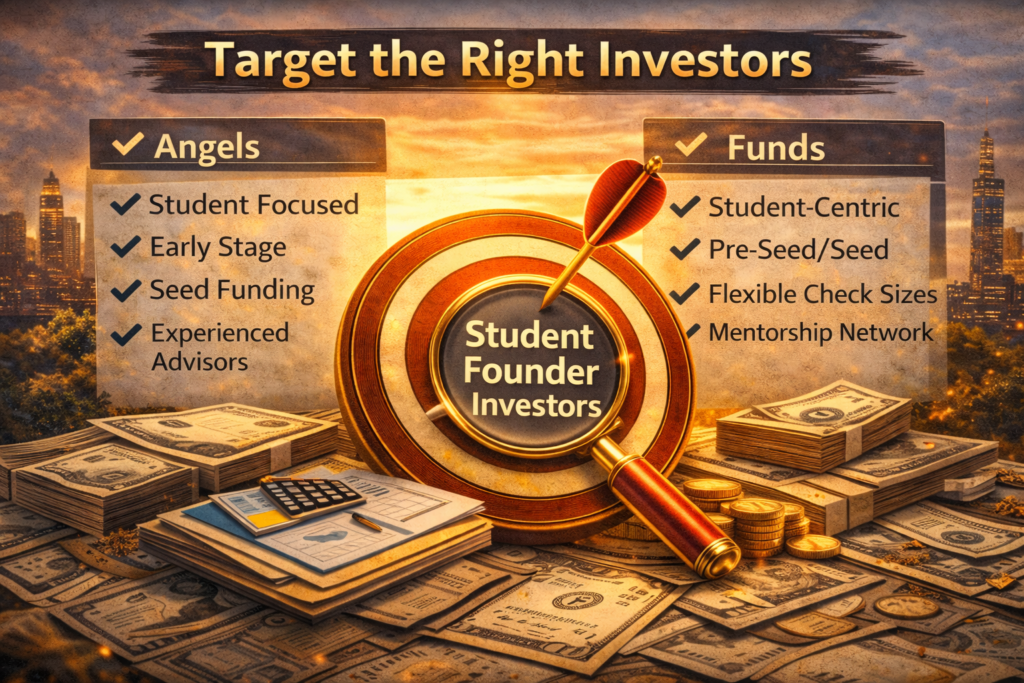
Common early-stage funding sources include:
- Angel investors who back early ideas
- Pre-seed and seed funds focused on growth potential
- Start up accelerators that provide capital and mentorship
- College incubators and innovation grants
Each of these has different expectations. Align your pitch according to their investment style.
Research Before You Reach Out
Investors prefer founders who understand their portfolio and thesis. Study:
- What industries they invest in
- Average ticket size
- Stage preference
- Past successful start ups
Mentioning relevant portfolio companies shows seriousness and preparation. This builds instant credibility.
Build Relationships Before Asking for Money
Do not treat investors like ATM machines. Engage with their content, attend events, ask thoughtful questions, and build rapport over time. A warm introduction always works better than a cold email.
Key relationship principles:
- Personalize every outreach
- Be concise and professional
- Follow up respectfully
- Focus on long-term connection, not just capital
Rejection is common in fundraising. Do not take it personally. Every no brings you closer to the right yes.
When you target the right investors with a thoughtful approach, you increase your chances of securing funding faster and smarter. Strategic networking transforms uncertainty into real opportunity.
Secret #5 – Build Social Proof and Authority Before You Raise
Investors look for signals that reduce uncertainty. As a student or first-time founder, you may not have years of experience, but you can build visible credibility. Social proof reassures investors that others already believe in your vision.
Authority is not about age. It is about positioning.
Why Social Proof Matters
When investors see validation from external sources, their confidence increases. It shows that your start up is not operating in isolation. Even small recognitions can create a powerful psychological impact.
Forms of social proof that strengthen your profile:
- Winning or participating in start up competitions
- Getting selected into incubators or accelerators
- Media mentions or campus recognition
- Testimonials from users or mentors
- Partnerships with student organizations or local businesses
Each achievement adds a layer of trust.
Leverage Your College Ecosystem
Your college environment is a major advantage. Many student founders ignore this resource. Professors, alumni networks, entrepreneurship cells, and campus events can open unexpected doors.
Practical steps to build authority:
- Present your idea at college demo days
- Seek mentorship from experienced faculty
- Connect with alumni founders on LinkedIn
- Collaborate with skilled peers to strengthen your team
These actions show initiative and seriousness.
Establish Digital Presence
In today’s funding landscape, your online presence acts as your public resume. Share insights from your start up journey. Post lessons learned. Document milestones. This builds consistent visibility.
Key reminders:
- Visibility builds trust
- Recognition reduces investor hesitation
- Small achievements compound into strong credibility
When investors research you and find proof of activity, growth, and leadership, conversations shift. You are no longer just a student with an idea. You become a founder building momentum.
Secret #6 – Think Like an Investor, Not Just a Founder

To secure funding faster, you must shift your mindset. Many student founders think emotionally about their product. Investors think analytically about risk and return. When you start viewing your start up from an investor’s perspective, your conversations become sharper and more convincing.
Investors are not asking, Is this idea interesting?
They are asking, Can this become a scalable and profitable business?
Understand What Investors Evaluate
Before investing, most investors assess a few critical factors:
- Market size and growth potential
- Scalability of the business model
- Revenue clarity and unit economics
- Competitive advantage
- Founder resilience and adaptability
If you cannot confidently explain these areas, funding becomes difficult.
Know Your Numbers Clearly
Even as a student founder, financial awareness is essential. You do not need to be a finance expert, but you must understand your fundamentals.
Key financial metrics to master:
- Revenue model and pricing logic
- Customer Acquisition Cost
- Lifetime Value of a customer
- Burn rate
- Runway
Clarity in numbers signals maturity and preparation.
Prepare for Tough Questions
Investors will challenge you. They may question your market assumptions or your ability to execute. Do not see this as criticism. See it as evaluation.
Common questions you must answer confidently:
- Why now
- Why this market
- Why you
Key mindset shifts:
- Replace emotion with strategic clarity
- Replace assumptions with data
- Replace fear with preparation
When you think like an investor, you reduce uncertainty. And when uncertainty decreases, funding decisions happen faster. This mental transformation turns you from a hopeful founder into a credible business leader ready for serious capital.
Bonus – Alternative Funding Options Beyond Traditional Investors
Not every student founder needs venture capital immediately. Sometimes the smartest move is choosing flexible and low-risk funding paths that help you grow steadily.
Consider these alternatives:
- Government start up grants and innovation schemes(to know more click here)
- College incubation funding
- Crowdfunding platforms(to know more click here)
- Revenue-based financing
- Strategic partnerships
- Bootstrapping through early sales(to know more click here)
These options reduce equity dilution and give you more control. Early funding is not about chasing big cheques. It is about building sustainable momentum.
Smart founders understand that capital is a tool, not validation. Choose funding that aligns with your stage, vision, and long-term ownership goals.
Realistic Timeline – How Fast Can You Secure Funding
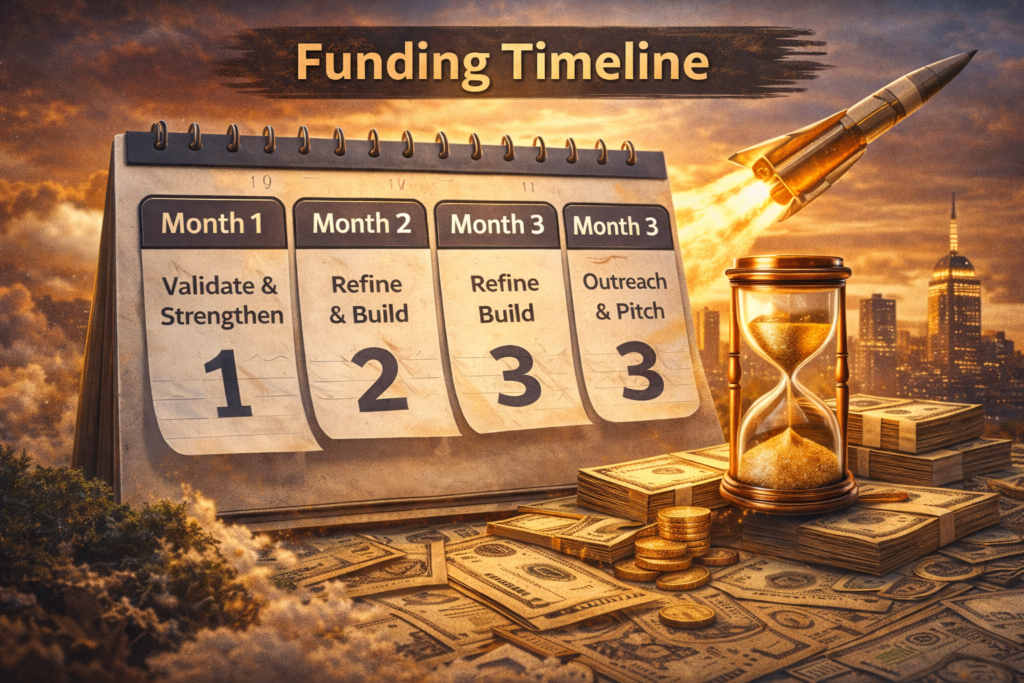
Many student founders expect funding within weeks. In reality, fundraising requires patience and consistent effort. Securing investment can take three to six months depending on your traction, preparation, and network.
A practical timeline often looks like this:
- Month 1: Validate idea and strengthen proof
- Month 2: Refine pitch and build investor list
- Month 3 and beyond: Outreach, meetings, and follow-ups
Speed depends on clarity and readiness. Focus on building strong fundamentals instead of rushing the process. Sustainable funding happens when preparation meets the right opportunity at the right time.
Common Myths About Student & First-Time Founder Funding
Many young founders delay action because of limiting beliefs. These myths create fear and hesitation, but they are not facts.
Common misconceptions include:
- Investors do not fund students
- Only tech start ups get investment
- You need an MBA or corporate background
- You must have a perfect product before pitching
In reality, investors back potential, execution, and clarity. Age is not a barrier. Lack of experience is not permanent. What truly matters is traction and mindset.
Break these myths early. Confidence grows when you replace assumptions with real understanding and bold action.
90-Day Action Plan to Prepare for Funding
Instead of waiting for the perfect moment, follow a structured and disciplined roadmap. Ninety days of focused execution can transform your start up readiness.
First 30 Days
- Validate your idea with real users
- Build a simple MVP
- Collect feedback and testimonials
Next 30 Days
- Refine your pitch deck(to know more click here)
- Clarify financial basics
- Strengthen online presence
Final 30 Days
- Build an investor target list
- Start outreach and networking
- Practice investor conversations(to know more click here)
Consistent action builds confidence and momentum. Funding favors founders who prepare before they ask.
FAQ
1. Can students really secure start up funding without experience?
Yes, students can absolutely raise funding even without prior experience. Investors focus on traction, clarity, and execution ability more than age. If you can show proof of demand, a scalable model, and strong commitment, experience becomes less important. Many successful founders started while still in college. What matters most is preparation and your ability to reduce investor risk through results.
2. What is the minimum traction needed before approaching investors?
There is no fixed number, but you should have some form of validated proof. This can include an MVP, early users, revenue, partnerships, or a strong waitlist. Even small traction signals seriousness. Investors want evidence that the market needs your solution, not just a well-designed presentation.
3. How long does it typically take to secure funding?
Fundraising usually takes three to six months, depending on your readiness and network. The process involves preparation, outreach, meetings, and follow-ups. Speed increases when you approach the right investors with clear numbers and strong positioning.
4. Should student founders bootstrap before seeking investment?
In many cases, yes. Bootstrapping helps you validate your idea and maintain ownership. Early revenue strengthens your negotiation power and builds financial discipline. External funding works best when your foundation is already strong.
5. What is the biggest mistake first-time founders make while pitching?
The biggest mistake is focusing only on the product instead of the business opportunity. Investors care about market size, scalability, and returns. Present your start up with strategic clarity, not just passion.